
 ← Creativity
 Boys and Creativity: Breaking the Stereotypes That Box Them In
How quiet creative time helps boys grow emotionally, build focus, and explore parts of themselves that stereotypes try to shut down.
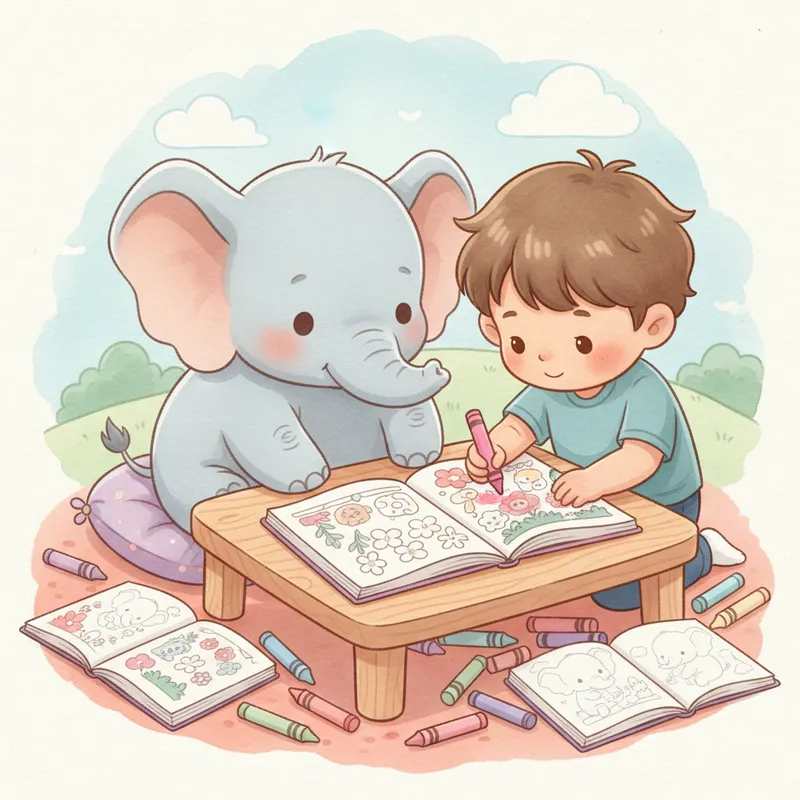
A while back, one of our little ones reached for a pink crayon and then paused. Just a tiny pause. Like he was checking if it was okay. He is barely old enough to read, and he had already picked up the idea that some colors were not for him. We did not say anything dramatic. We just kept coloring. He picked up the pink, used it, and moved on. But that pause stuck with us.
It is wild how early kids absorb these messages. Boys are loud, boys are rough, boys do not sit still, boys do not do art, boys do not cry. None of it is true across the board, and yet the script gets handed to them so quickly. Creativity is one of the first things to get squeezed out.
The quiet myth that boys are not creative
Boys are creative. Deeply, weirdly, wonderfully creative. They build elaborate worlds with sticks and rocks. They invent rules for games on the spot. They will narrate a 20-minute story about a dinosaur who runs a pizza place. The myth is not that boys are less creative. The myth is that creativity has to look a certain way to count.
When we picture a creative kid, we often picture a child quietly painting at a table. So when a boy expresses creativity through movement, building, taking things apart, or making weird sound effects, we sometimes miss it entirely. Then we wonder why he is not into art. He might love art. He just has not been invited to a version of it that fits him.
Why creative time matters more for boys than people admit
Quiet creative time is not just about making something pretty. It is one of the few low-pressure spaces where boys get to:
- Sit with their feelings without having to talk about them out loud
- Make choices that have no right or wrong answer
- Practice patience in a way that feels like play, not a lecture
- Show softness without anyone making a comment about it
- Be slow in a world that often expects them to be fast and tough
That last one is big. A lot of boys are praised for being strong, fast, brave. Fewer are praised for being thoughtful, gentle, careful. Coloring quietly next to a parent, picking colors with intention, taking time on a tricky section, that is a whole different muscle. And it deserves the same kind of warm attention.
Small things that help (without making it a project)
You do not need a curriculum. You just need to keep the door open.
- Do not comment on color choices. Pink dinosaurs are great. Green skies are great. Let the choices be his.
- Color next to him, not at him. No coaching. No “are you going to do the trees too?” Just sit and color your own page.
- Skip the gendered language. Avoid “that is more for girls” or “boys do not usually like that.” Even said as a joke, it lands.
- Praise the process, not the product. “You really took your time on that one” goes further than “that is so good.”
- Keep supplies visible. If crayons live in a drawer, they get used less. If they live on the table, they become normal.
A book made with this in mind
One of our books, Awesome Boys, was built around this exact idea. The pages celebrate the full range of who boys actually are. Adventurous and gentle. Loud and quiet. Building, dreaming, exploring, resting. We wanted boys to flip through it and feel like every version of themselves was welcome on the page.
If you have a boy who has started shrinking certain interests, or who has not quite found his way into creative play yet, it can be a soft place to land. No pressure, no rules about which colors go where, no message that he has to color a certain way to do it right.
Your next step
This week, try one thing. Sit down next to your boy with crayons or markers, do not hand him instructions, and color your own page while he colors his. Stay for ten minutes. That is it. You may be surprised what comes out, in his pages and in the conversations that drift in between the colors. Boys do not need to be pushed into creativity. They just need someone who does not flinch when they reach for the pink crayon.
Keep exploring
- Raising confident girls: how creative play builds self-esteem — the companion piece to this one, with a different lens.
- Screen-free activities boys actually love (that are not sports) — practical ideas when sports are not the answer.
- Teaching kids to name their feelings (without awkward talks) — how creative time becomes emotional time, naturally.

More articles
Raising confident girls: how creative play builds self-esteem
Confidence is not taught through speeches: it is built through experiences where they decide.
How fantasy coloring sparks imagination and problem-solving in kids
Unicorns, dragons, and mermaids are not just fun — they train your child's creative thinking.
Why fashion coloring is the perfect creative outlet for teens
Teens need pressure-free self-expression: fashion on paper is creative therapy in disguise.