
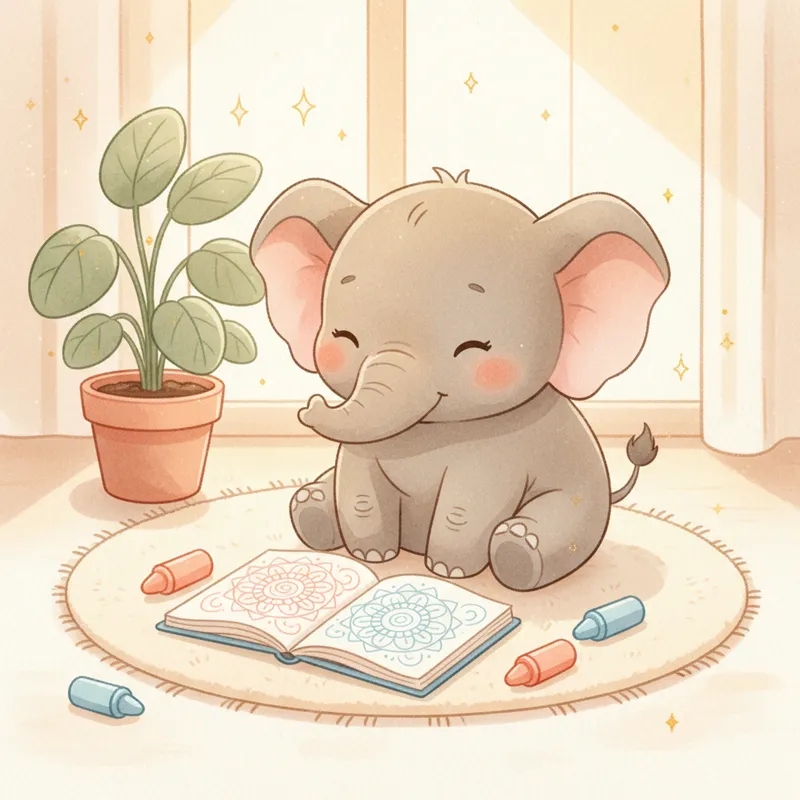
 ← Focus & Calm
 Mindfulness Coloring Exercises That Actually Calm Anxious Kids
Simple mindfulness coloring exercises to help anxious kids slow down, breathe, and feel grounded — no meditation app required.
Your kid is pacing around the living room, shoulders tight, telling you their stomach feels weird again. Maybe it is a big test tomorrow. Maybe a playdate that went sideways. Maybe nothing they can even put into words yet. You want to help, but the last thing they want is another conversation about feelings.
This is where a quiet coloring page and a handful of crayons can do more than you would expect. Mindfulness coloring is not a cure for anxiety, but it is one of the gentlest, most kid-friendly ways to help a worried little brain slow down and come back to the present moment.
Why coloring works for anxious kids
Anxiety lives in the body as much as in the head. Fast breathing, tight shoulders, racing thoughts. Mindfulness works by inviting the body back to something simple and physical: the feeling of feet on the floor, the sound of a breath, the movement of a hand.
Coloring checks a lot of mindfulness boxes without ever using the word:
- It asks for focused attention on one small area at a time
- It uses repetitive, gentle motion that soothes the nervous system
- It gives the mind a low-stakes task so it can stop rehearsing worries
- It provides a clear start and end, which anxious kids really appreciate
And the best part? Your kid does not have to sit still with their eyes closed or talk about anything. They just color.
5 mindfulness coloring exercises to try this week
These are simple, tested-at-home ideas. Pick one, not all. The goal is calm, not a curriculum.
1. The slow-breath color. Ask your kid to pick one color and use it only when they breathe out. Breathe in, pause. Breathe out, color a little. It turns coloring into a body-paced breathing exercise without any lecture about breathing.
2. Name one thing. While they color, gently ask: “Tell me one thing you can hear right now.” Then, a minute later, “One thing you can feel.” This is a classic grounding technique sneaked into a coloring session.
3. The tiny area challenge. Invite them to color just one small shape — a petal, a window, a single leaf — as slowly and carefully as they can. Slowness is the whole point. It pulls the brain out of fast-forward.
4. Color the feeling. Ask, “If your worry was a color, which one would it be? And if calm was a color?” Let them color with those two crayons however they want. No interpretation needed.
5. Silent color side by side. Sit next to them and color your own page. No questions, no music, no talking. Just shared quiet. For many kids, your calm body next to theirs is more regulating than any technique.
Setting up a calm coloring space
You do not need a dedicated room. A corner works. What helps:
- A soft surface — a rug, a cushion, or the couch
- Warm, low lighting if possible (overhead lights can feel harsh when anxious)
- A simple tray with crayons or pencils so there is no hunting for supplies
- A coloring book with uncomplicated pages — not overwhelming detail
Overly intricate pages can actually backfire for anxious kids. Busy designs feel like one more thing demanding attention. Simple, open pages let them breathe.
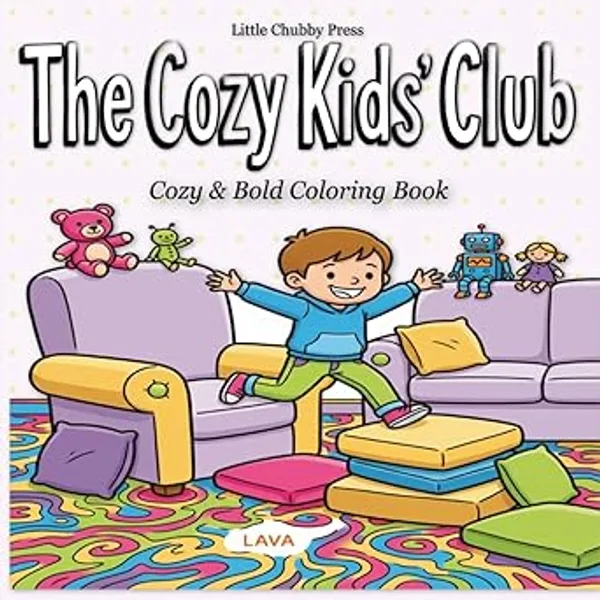
We made The Cozy Kids Club with exactly this in mind — friendly characters, gentle scenes, and open space to color without pressure. Our own kids tested every page, and the ones that felt stressful did not make the cut. If you are curious, it is on Amazon whenever you want to take a look.
What to do (and not do) while they color
A few things that help:
- Sit close, stay quiet. Your calm presence is the active ingredient
- Skip the corrections. A green sky is a perfect sky today
- Let them stop early. Five minutes of real calm beats thirty minutes of forced focus
- Resist the debrief. You do not need to ask what they figured out. The nervous system already got the message
One thing to avoid: turning coloring into another performance. If it becomes “sit down and do your mindfulness,” it loses the magic. Keep it casual. Keep it optional. Keep it theirs.
Your next step
If your kid has been extra anxious lately, try one exercise today — maybe the silent side-by-side one, since it asks almost nothing from either of you. Pull out whatever coloring book you have, grab a few crayons, and just sit down. No setup speech, no explanation. Sometimes the simplest tools are the ones that stick.
Keep exploring
- How to create a calm-down corner with coloring for anxious kids — a simple setup that gives worried kids a safe landing spot.
- Teaching kids to name their feelings (without awkward talks) — gentle ways to help kids put words to what they feel.
- Why Coloring Is the Perfect Wind-Down Activity Before Bedtime — turn anxious evenings into calm ones with a simple routine.
More articles
Why Coloring Is a Lifesaver for Kids Who Struggle With Transitions
Discover how coloring becomes a calming bridge that helps anxious kids navigate daily transitions with less stress and more confidence.
How Coloring Quietly Builds Patience in Toddlers
Toddlers are not born patient — they grow into it. Here is how a few crayons and a quiet moment can teach more than you would expect.
Coloring Activities That Actually Work for Kids With ADHD
Practical, low-pressure coloring ideas that help kids with ADHD focus, regulate, and feel proud of what they create.