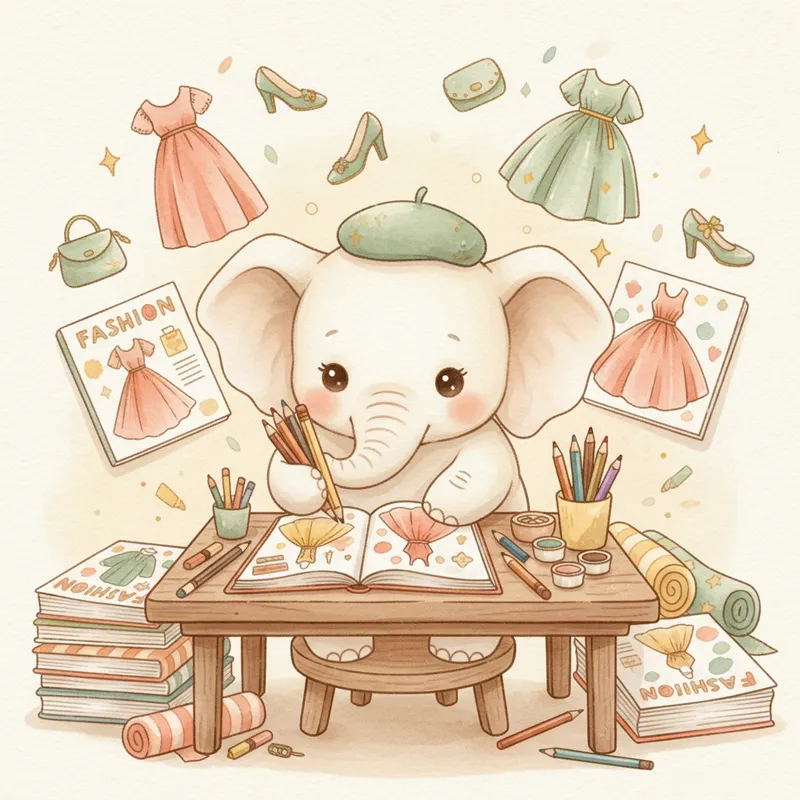
How Fashion Design Careers Actually Start With Coloring Books
Discover why famous fashion designers credit childhood coloring as their creative foundation and career launchpad.
You watch your child carefully color inside the lines of a dress, choosing purple for the bodice and adding sparkly details to the skirt. What you might not realize is that you are witnessing the early stages of what could become a lifelong passion—or even a career. Some of today’s most celebrated fashion designers trace their love of style back to those first moments with crayons and coloring books.
The surprising career connection
Many parents dismiss coloring as simple busy work, but fashion industry professionals know better. Coloring develops the exact skills fashion designers use every day: understanding proportions, experimenting with color combinations, and visualizing how different elements work together.
When children color clothing designs, they are unconsciously learning about silhouettes, pattern placement, and color theory. They start to understand that a flowing skirt needs different treatment than structured shoulders, or that certain colors make designs pop while others create subtle elegance.
This is not just theory. Renowned designers like Diane von Furstenberg and Marc Jacobs have spoken about their childhood love of drawing and coloring fashion illustrations. They credit these early creative experiences with teaching them to see clothing as art—a perspective that shaped their entire careers.
Building the designer mindset
Fashion coloring books do something remarkable: they teach children to think like designers before they even know what design means. When your child decides to make a coat bright red instead of the suggested blue, they are making an editorial choice. When they add stripes to a plain dress, they are problem-solving and innovating.
These decision-making moments build confidence in creative choices. Children learn that there are no wrong answers in design—only different possibilities. This mindset becomes crucial for anyone pursuing creative careers, where the ability to trust your instincts and take creative risks separates good designers from great ones.
The attention to detail required for coloring also mirrors the precision needed in fashion design. Professional designers must consider every button, seam, and hemline. Coloring teaches children to notice these details and understand how small elements contribute to the whole design.
Real skills for real careers
Beyond the creative aspects, fashion coloring develops practical skills that directly transfer to design careers. Children practice hand-eye coordination, learn to work within boundaries while pushing creative limits, and develop the patience required for detailed work.
Modern fashion design relies heavily on digital tools, but the fundamental skills remain the same. Designers who can sketch by hand often have an advantage because they can quickly communicate ideas and make adjustments. The fine motor control developed through coloring provides an excellent foundation for both traditional sketching and digital design work.
Color theory knowledge gained from experimenting with different combinations in coloring books translates directly to understanding seasonal palettes, complementary schemes, and the psychological impact of different hues—all essential knowledge for fashion professionals.
Supporting your future designer
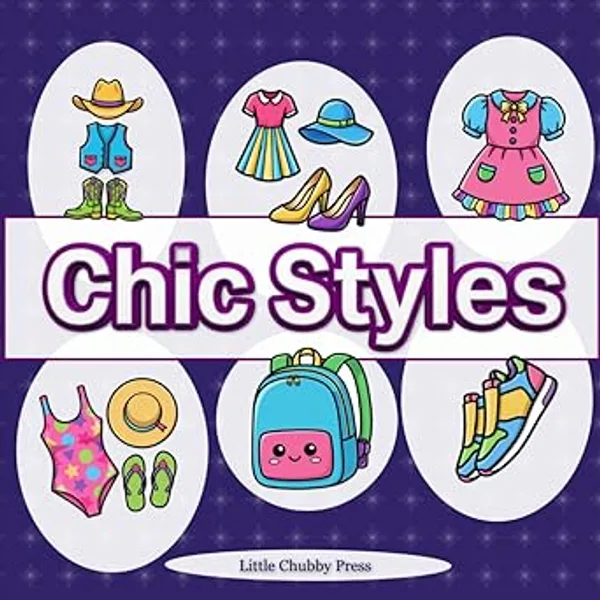
If your child shows interest in fashion through coloring, there are simple ways to nurture this passion. Provide them with quality coloring books that feature realistic clothing designs rather than cartoon characters. Chic Styles Coloring Book offers sophisticated fashion illustrations that challenge children to think about style choices while having fun with color.
Encourage them to explain their color choices. Ask questions like “Why did you choose that color for the shoes?” or “What do you think this person would wear this outfit to?” These conversations develop critical thinking about design and help children articulate their creative decisions.
Consider visiting fashion museums or looking through style magazines together. This exposure helps children understand that fashion is both art and craft, requiring both creativity and technical skill.
Your next step
Whether your child becomes the next great fashion designer or simply develops a lifelong appreciation for creativity and style, the coloring books they enjoy today are building important foundations. Embrace their interest, ask thoughtful questions about their choices, and remember that every great designer started somewhere—often with a simple coloring book and a box of crayons.
Keep exploring
- Why fashion coloring is the perfect creative outlet for teens — Discover how fashion coloring continues supporting creativity through the teenage years.
- A fun history lesson through fashion: coloring across decades — Learn how fashion coloring books can teach history and cultural appreciation.
- How dress-up coloring builds confidence and self-expression — Understand the psychological benefits of fashion-themed creative activities.
Related posts
The Hidden Fine Motor Skills Your Child Builds While Coloring
Discover how coloring secretly strengthens your child's fine motor skills and prepares them for writing, tying shoes, and more.
How Fairy Tale Coloring Transforms Kids Into Natural Storytellers
Discover how fairy tale coloring pages unlock your child's storytelling superpowers and boost creativity in surprising ways.
Why Coloring Is the Perfect Screen-Free Summer Activity
Discover why coloring beats screens for summer fun and keeps kids creatively engaged during long vacation days.