
 ← Creativity
 Slow Parenting, Nostalgia, and the Return of Analog Childhood
A practical pillar guide to slow parenting and analog childhood: less clutter, fewer screens, more tactile play, and the small rituals that make kids feel at home.
Somewhere between the third notification of the morning and a kid asking for the tablet before breakfast, a lot of us have had the same quiet thought: this is moving too fast. Not the kids — they are doing kid things. Us. The pace of the house. The pile of plastic. The blinking lights. There is a growing wave of families pulling back from all of that and reaching for something simpler, and slow parenting analog childhood is the phrase that keeps coming up.
This is a long one, but it is meant as a practical guide, not a manifesto. No guilt, no pressure to throw out the TV. Just a few honest ideas that have worked for our own four kids and the families we hear from.
What slow parenting actually means
Slow parenting is not a strict method. It is more of a posture. It says: my child does not need to be optimized every hour. Boredom is fine. Quiet is fine. Doing one thing for a long time is, somehow, a skill again.
In practice it looks like:
- Fewer scheduled activities, more open afternoons.
- Toys that do less, so kids can do more with them.
- Permission to repeat the same favorite thing for weeks.
- Less narration of every moment, more just sitting nearby.
It is not lazy parenting. It is actually pretty attentive — you are just paying attention to your kid, not to a curriculum.
Why analog childhood is making a comeback
The nostalgia is real, and it is not only about adults missing their own childhood. Parents are noticing something concrete: kids regulate better, sleep better, and play longer when their day has more analog texture. Paper, fabric, wood, water, dirt, crayons. Things you can hold.
A few reasons this shift is happening now:
- Screen fatigue is showing up earlier. Even four and five year olds get that wired-tired look after too much scrolling video.
- Parents want their attention back. Not just the kids, us too.
- Stuff overload is exhausting. A smaller, calmer toy shelf is genuinely a relief.
- Memory making is tactile. Kids remember the smell of the crayon box, not the loading screen.
A simple framework: less, slower, closer
If you want one phrase to carry around in your head, try this one. Less, slower, closer.
- Less. Fewer toys out at one time. Fewer apps. Fewer transitions in a day.
- Slower. Longer stretches of one activity. Mornings that are not a sprint.
- Closer. More activities you can do in the same room, even if everyone is doing their own thing.
Notice that none of this requires buying anything. Slow parenting is one of the few parenting trends that asks for less, not more.
Practical swaps you can try this week
You do not need to overhaul your home. Pick one or two of these.
- Replace one short video block with a basket of paper, crayons, and a coloring book on the table.
- Move a screen out of the bedroom and put a small reading lamp there instead.
- Choose one weeknight that is officially slow: no errands, no screens after dinner, just whatever happens.
- Rotate toys. Put two thirds of them in a closet. Bring them back in three weeks. Kids will think they are new.
- Build a tiny ritual: same song while cleaning up, same snack on Sunday, same bedtime story spot.
Rituals are the secret weapon of analog childhood. They are free, repeatable, and they make a regular Tuesday feel like home.
Where coloring fits in
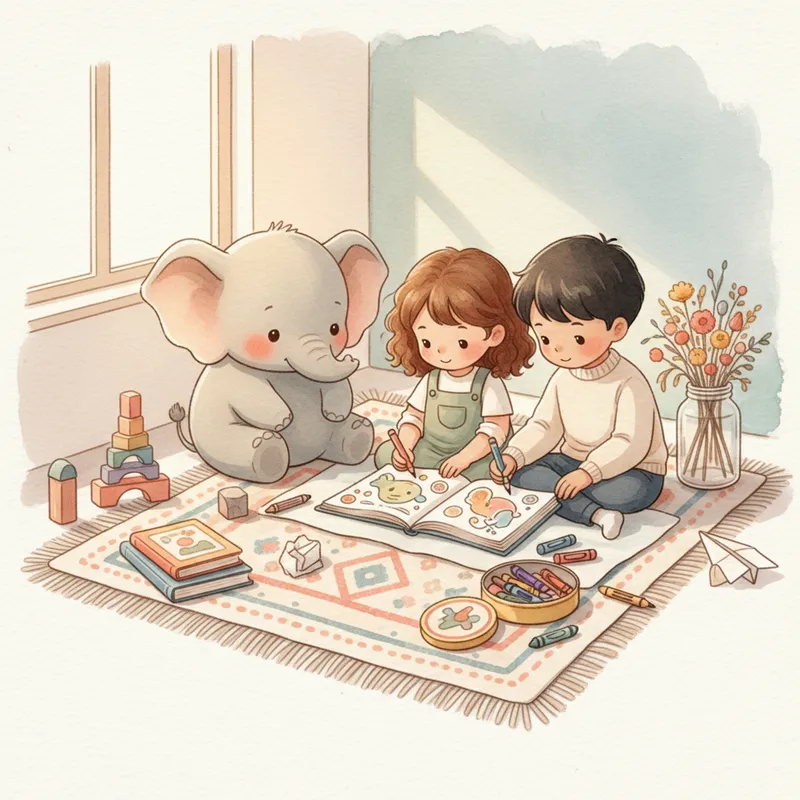
We are obviously biased here, but coloring is one of the most honest analog activities a kid can do. It is slow on purpose. It uses the hands. It works in silence or in conversation. It does not need batteries or a tutorial. And — important for slow parenting — it lets adults sit alongside without performing.
Our books are simple to color, which is the whole point. They do not create stress. There is no wrong color. If your kid wants a green sun and a purple dog, that is perfect. The goal is the time spent together, not the finished page.
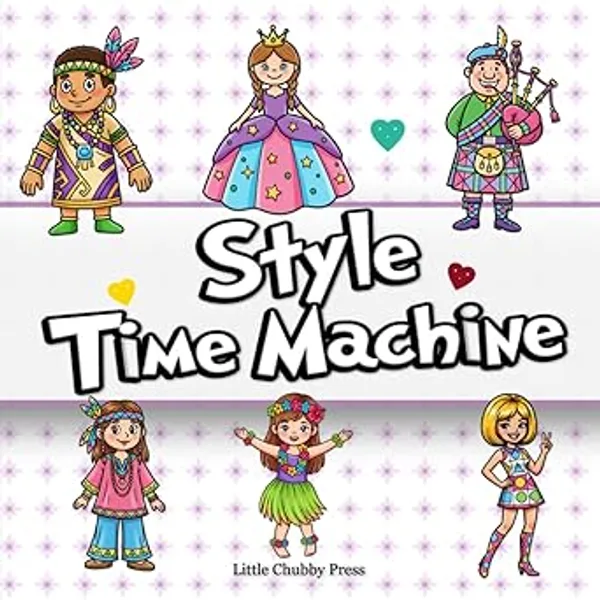
If you want to combine slow afternoons with a tiny bit of nostalgia, our book Style Time Machine is a nice fit. It travels through different eras of clothing and everyday style, which naturally sparks conversations like “what did people wear when grandma was little?” Those conversations are exactly the kind of slow, no-pressure storytelling that analog childhood thrives on. Check it out if you are curious — it is on Amazon whenever you are ready.
What to expect when you slow down
The first few days can feel weird. Kids may say they are bored. That is the activation phase, and it usually passes within a week. After that you tend to see:
- Longer attention spans on simple activities.
- More invented games (sticks become swords, couches become boats).
- Calmer transitions, especially around bedtime.
- More questions. Slow kids ask better questions.
You will also probably feel calmer yourself. That part surprises a lot of parents.
Your next step
Pick one slow ritual this week and protect it. Just one. Maybe it is a Sunday morning coloring session at the kitchen table, or a no-screens dinner, or a walk after school with no agenda. Do it again next week. That is how analog childhood is actually built — not in one big decision, but in small repeated moments. Your kid does not need a perfect plan. They just need you, a little less in a hurry. 🐘
Keep exploring
- The Complete Screen-Free Activity Guide for Busy Families — a deeper toolkit for filling those slower afternoons.
- Parent Wellbeing: Small Creative Pauses That Help the Whole Family — slow parenting works better when the adults rest too.
- Visual Routines and Calm Transitions for Young Kids — simple rituals that make the slow pace stick.
More articles
Boys and Creativity: Breaking the Stereotypes That Box Them In
How quiet creative time helps boys grow emotionally, build focus, and explore parts of themselves that stereotypes try to shut down.
Mix-and-Match Fashion: A Fresh Way to Color With Girls
Turn ordinary coloring time into a creative styling session with mix-and-match fashion pages that let girls design their own looks.

How Fairy Tale Coloring Transforms Kids Into Natural Storytellers
Discover how fairy tale coloring pages unlock your child's storytelling superpowers and boost creativity in surprising ways.