 ← Learning & STEM
 Alphabet Games Beyond the ABCs: Creative Coloring Activities That Make Letters Stick
Transform letter learning with creative alphabet coloring games that go far beyond basic recognition to build real literacy skills.
Your four-year-old knows the alphabet song by heart, but when you point to a random letter on a page, they freeze. Sound familiar? Knowing the ABC song is just the beginning — real letter mastery happens when kids can recognize, write, and connect letters to sounds in creative, engaging ways.
Why traditional alphabet learning falls short
Most alphabet activities stop at recognition: “This is A, this is B.” But research shows that children need multiple pathways to truly internalize letters. They need to see them, trace them, connect them to sounds, and most importantly, make them personally meaningful.
Coloring creates that personal connection. When your child colors the letter ‘S’ shaped like a snake, they are not just learning what ‘S’ looks like — they are building a mental bridge between the letter, its sound, and a memorable image. This multi-sensory approach helps information stick in ways that flashcards simply cannot match.
Creative alphabet coloring games that work
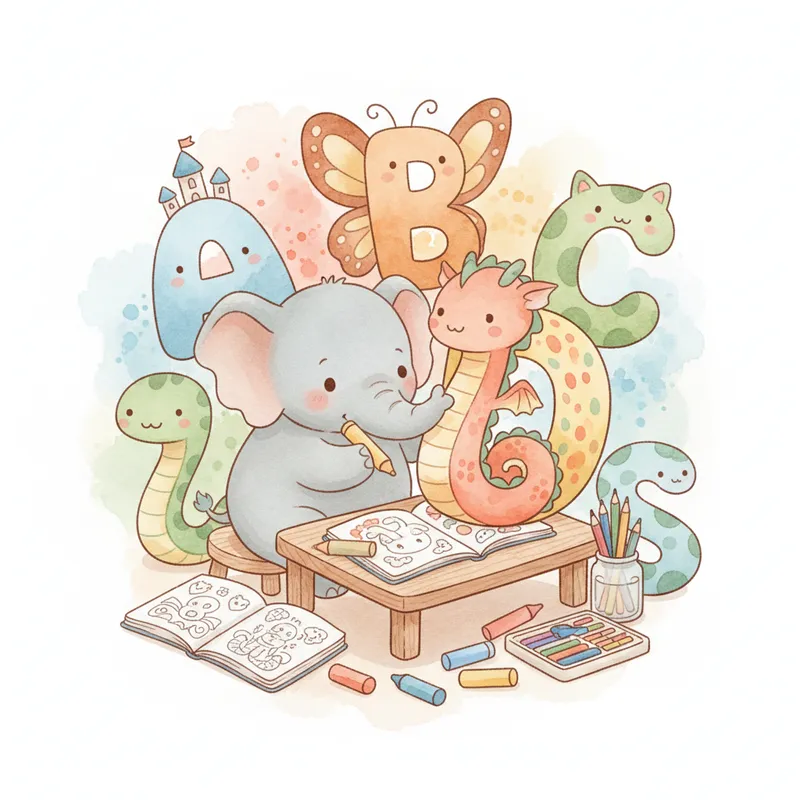
Letter transformation activities turn each letter into something that starts with that sound. Draw ‘B’ as a butterfly, ‘C’ as a cat, or ‘T’ as a tree. Your child colors while naturally connecting the letter to its sound. The Alphabet Coloring Book takes this concept further with professionally designed letter characters that make each one memorable and fun.
Alphabet story maps combine coloring with storytelling. Start with ‘A’ and create a story that moves through the alphabet. “Annie the Ant (A) met a Big Bear (B) who was Carrying Carrots (C).” Your child colors each scene while following the narrative, making letters part of a bigger, more engaging experience.
Letter hunt and color games turn your home into an alphabet adventure. Hide paper letters around the house, and when your child finds each one, they color it and name something in that room that starts with that letter. This connects abstract letters to concrete objects in their world.
Building writing readiness through coloring
Coloring alphabet letters builds the fine motor control needed for writing. Start with thick, simple letter outlines and gradually introduce more detailed designs as your child’s skills develop. The repetitive motion of coloring strengthens the same hand muscles they will use to form letters with a pencil.
Encourage your child to trace the letter outline with their finger before coloring. This kinesthetic practice helps them internalize the proper letter formation sequence — crucial for preventing reversed letters and poor handwriting habits later.
Making letters personally meaningful
The most powerful alphabet learning happens when letters connect to your child’s world. Create personalized alphabet books where ‘M’ is for Mama, ‘D’ is for Daddy, and ‘P’ is for your pet’s name. When children color letters that represent people and things they love, those letters become emotionally significant.
Try “alphabet all about me” coloring pages where each letter represents something special to your child. ‘S’ might be for soccer (their favorite sport), ‘I’ for ice cream (their favorite treat), and ‘B’ for their best friend’s name.
From coloring to reading confidence
These creative alphabet activities build more than letter knowledge — they create positive associations with literacy. When learning letters feels like play rather than work, children develop the confidence and enthusiasm they need for reading success.
Watch for signs that your child is connecting letters to sounds during coloring time. They might start making the ‘sss’ sound while coloring a snake-shaped ‘S’, or proudly announce that ‘butterfly’ and ‘B’ both start the same way. These moments show that deep learning is happening.
Your next step
Choose one creative alphabet coloring activity to try this week. Start simple — maybe transform three letters into animals or objects that start with those sounds. Remember, the goal is not perfection but connection. When your child sees letters as friends rather than mysterious symbols, you have given them the foundation for a lifetime of reading joy.
Keep exploring
- The sneaky way to teach letters before preschool starts — Perfect preparation strategies for pre-K success.
- The Hidden Fine Motor Skills Your Child Builds While Coloring — Discover the physical skills that support writing development.
- How to choose your kid’s first coloring book (without wasting money) — Essential tips for selecting age-appropriate coloring materials.

More articles
How Coloring Supports Early Learning and Fine Motor Skills
A practical pillar guide on how coloring builds fine motor skills, pre-writing, vocabulary, and visual thinking in young kids.
Seasonal Fruits and Vegetables: A Coloring Adventure That Teaches Without Trying
Turn the produce aisle into a creative learning moment with seasonal fruits and vegetables coloring activities your kids will actually enjoy.
Airplane Coloring: The Sneaky Way to Teach Geography
Turn a simple coloring session into a mini geography lesson. Airplanes, maps, and crayons are a surprisingly powerful combo for curious kids.