
 ← Learning & STEM
 Airplane Coloring: The Sneaky Way to Teach Geography
Turn a simple coloring session into a mini geography lesson. Airplanes, maps, and crayons are a surprisingly powerful combo for curious kids.
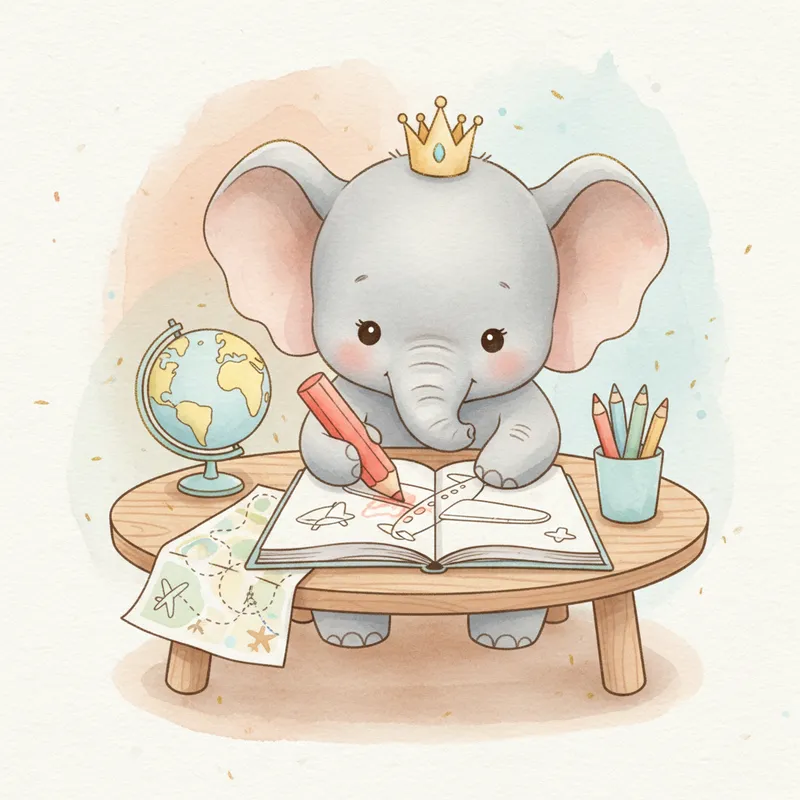
Picture this: your kid is on the floor with crayons, coloring an airplane. It looks like a regular afternoon. But within twenty minutes, they are asking where Japan is, why the North Pole is cold, and whether airplanes can fly over oceans. That is not an accident. Airplane coloring has a sneaky way of opening up the whole world, one page at a time.
We noticed this with our own kids. One of our little ones started coloring a cargo plane and kept asking, “Where does this one go?” That simple question turned into pulling up a map, talking about continents, and picking out countries we had never discussed before. No lesson plan. No pressure. Just crayons and curiosity.
Why airplanes are a geography gateway
Airplanes naturally invite questions about places. A kid coloring a car might ask about roads. A kid coloring a boat might ask about rivers. But a kid coloring an airplane? They ask about the whole planet. That is a big difference.
Think about what an airplane represents to a child:
- It goes somewhere far away
- It crosses oceans, mountains, and deserts
- It lands in places with different languages and flags
- It connects people who live very far apart
When kids color planes, they are not just filling in shapes. They are imagining journeys. And imagining journeys is the first step toward understanding geography in a way that actually sticks.
Simple ways to turn coloring into a geography lesson
You do not need to turn every coloring session into a classroom. That would ruin the fun. But if your kid is already curious, here are a few low-effort ways to lean in:
Keep a map nearby. A basic world map on the wall (or even printed on paper) is enough. When your kid colors a plane, casually ask where they think it is flying. Then find that spot on the map together.
Talk about flags and colors. If they are coloring a plane, ask what country it might belong to. Let them invent one, or pick a real country and look up the flag colors. This is a fun way to introduce new places without making it feel like homework.
Invent destinations together. “This plane is flying to a jungle. What color should it be?” Suddenly you are talking about climates, animals, and weather, all through color choices.
Compare climates. A plane flying to the Arctic might need different colors than one flying to a tropical island. This opens up conversations about weather, seasons, and why certain places look the way they do.
What to look for in an airplane coloring book
Not all airplane coloring books are created equal. Some are too detailed for younger kids and frustrating to finish. Others are too generic and do not spark any curiosity. The best ones include a variety of airplane types, clean lines kids can actually color inside, and enough visual interest to prompt questions.
Our book Awesome Airplanes was designed exactly for this kind of open-ended play. It features different types of planes, from small propeller ones to big passenger jets, with simple, friendly illustrations that give kids space to imagine. We made sure every page was approved by our own kids before it went to print, so we know the designs actually hold their attention. It is on Amazon whenever you feel like exploring it.
Small conversations, big learning
The thing about geography is that kids do not learn it from memorizing capitals. They learn it from stories, from curiosity, from connecting places to something they care about. A coloring page of an airplane is a tiny door. On the other side of that door is a whole world.
You do not have to know every answer. “I do not know, let us look it up” is a great sentence. In fact, it might be one of the best sentences a kid can hear from a parent, because it models that learning is something we do together, not something adults already finished.
Your next step
If your kid loves airplanes, lean into it this week. Pull out a coloring book, sit on the floor with them, and let the questions come. You do not need to plan anything. Just be ready to follow the conversation wherever it goes. Some of the best learning happens when no one is trying to teach.
Keep exploring
- How airplane coloring teaches kids about the world — a deeper look at how planes spark global curiosity.
- How space coloring turns curiosity into a STEM foundation — for kids who want to go even higher than airplanes.
- Did You Know? Airplanes Get Struck by Lightning — And It’s Totally Fine! — a fun fact to drop during your next coloring session.

More articles
How Coloring Supports Early Learning and Fine Motor Skills
A practical pillar guide on how coloring builds fine motor skills, pre-writing, vocabulary, and visual thinking in young kids.
Seasonal Fruits and Vegetables: A Coloring Adventure That Teaches Without Trying
Turn the produce aisle into a creative learning moment with seasonal fruits and vegetables coloring activities your kids will actually enjoy.
Alphabet Games Beyond the ABCs: Creative Coloring Activities That Make Letters Stick
Transform letter learning with creative alphabet coloring games that go far beyond basic recognition to build real literacy skills.