
 ← Learning & STEM
 How Construction Coloring Teaches Spatial Awareness (The Skills Will Amaze You)
Discover how construction coloring pages secretly build crucial spatial skills that help kids excel in math, science, and life.
Your child is hunched over a coloring page of a bulldozer, tongue poking out in concentration. You might think this is just quiet time, but something incredible is happening in their brain. Those construction scenes are secretly building one of the most important cognitive skills for future success: spatial awareness.
What is spatial awareness and why does it matter?
Spatial awareness is your child’s ability to understand how objects relate to each other in space. It is the skill that helps them pack a backpack efficiently, navigate a playground, or later tackle geometry and engineering concepts. Research shows that strong spatial skills in early childhood predict success in STEM fields better than early math or reading abilities.
When children color construction scenes, they are not just staying within lines. They are mentally rotating dump trucks to understand different angles, figuring out how a crane fits next to a building, and processing the relationship between a worker and their massive machinery. This three-dimensional thinking builds the foundation for advanced problem-solving skills.
How construction scenes boost spatial development
Construction coloring pages are particularly powerful for spatial development because they naturally include multiple perspectives and complex machinery. Unlike simple animal or flower pages, construction scenes require children to understand:
- Scale relationships — How big is that excavator compared to the construction worker?
- Depth perception — Which truck is in front, and which is behind?
- Mechanical understanding — How do all these parts fit together to make the machine work?
- Spatial positioning — Where does the cement mixer park in relation to the building?
Each time your child decides what color to use for the front wheel versus the back wheel of a dump truck, they are processing spatial relationships. When they color the crane arm extending over a building, they are practicing mental rotation and understanding three-dimensional space.
The brain science behind the benefits
Neuroscience research reveals that spatial processing activates the same brain regions used in mathematics, particularly geometry and algebra. When children regularly engage with spatial tasks like construction coloring, they strengthen these neural pathways.
The act of coloring itself adds another layer of benefit. As children decide how to shade a bulldozer blade to show its curved surface, or how to color a building to show which side faces the sun, they are practicing visual-spatial reasoning. These micro-decisions build confidence in spatial thinking that transfers to other areas of learning.
Practical ways to maximize the spatial learning
To get the most spatial awareness benefits from construction coloring, try these simple strategies:
- Ask perspective questions — “Which wheel looks bigger, and why do you think that is?”
- Encourage realistic coloring — “What color would the shady side of that building be?”
- Connect to real life — Point out construction sites and relate them to the coloring pages
- Build with blocks afterward — Let them recreate scenes from their coloring pages with toy blocks or LEGOs
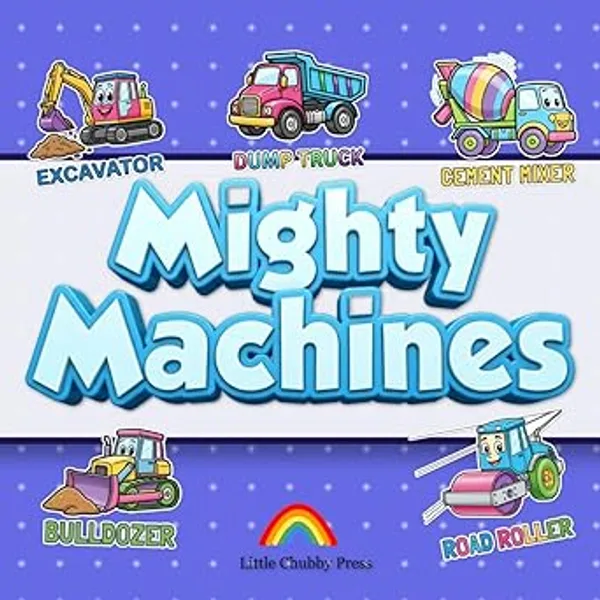
The Mighty Machines Coloring Book is particularly excellent for spatial development because it features detailed construction vehicles from multiple angles, with workers and buildings that help children understand scale and relationships. Each page is designed to challenge spatial thinking while remaining engaging for young colorists.
Signs your child is developing spatial skills
As your child works through construction coloring pages, watch for these positive signs of growing spatial awareness:
- They start coloring vehicles more realistically, showing understanding of light and shadow
- They ask questions about how machines work or fit together
- They begin drawing their own construction scenes with proper proportions
- They show improved puzzle-solving abilities
- They demonstrate better understanding of directions like “behind,” “next to,” or “above”
These skills will serve them well beyond coloring time, supporting everything from reading maps to understanding scientific diagrams to excelling in mathematics.
Your next step
The next time your child reaches for construction coloring pages, remember that you are witnessing serious brain development in action. Those careful color choices and focused attention are building spatial skills that will benefit them for years to come. Encourage their construction coloring adventures, ask curious questions about what they see, and watch their spatial confidence grow one bulldozer at a time.
Keep exploring
- How space coloring turns curiosity into a STEM foundation — Discover another powerful way coloring builds STEM skills
- Why kids obsessed with trucks and diggers are building real skills — Learn what that construction vehicle fascination really means
- The Hidden Fine Motor Skills Your Child Builds While Coloring — Explore the physical development happening alongside spatial growth
More articles

Why kids obsessed with trucks and diggers are building real skills
That excavator obsession is not random: it is training their engineering brain.

How Coloring Supports Early Learning and Fine Motor Skills
A practical pillar guide on how coloring builds fine motor skills, pre-writing, vocabulary, and visual thinking in young kids.

Airplane Coloring: The Sneaky Way to Teach Geography
Turn a simple coloring session into a mini geography lesson. Airplanes, maps, and crayons are a surprisingly powerful combo for curious kids.